








Stumbling Stones
"A person is forgotten only when his name is forgotten" (Talmud)
At the end of 2020, Reus City Council, wanting to pay tribute, remember and do justice to these people, joined the initiative - led in our home by Democratic Memorial - of the Stolpersteine project - cobblestones that stumble.
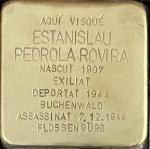
What is Stolperseiten? Stolsperstein is a project born from the hand of the artist Gunter Demnig in Germany in memory of the victims of Nazism. They are exactly 10cm x 10cm cobblestones covered with a sheet of brass, made by hand, one by one, in such a way that no cobblestone is the same. The artist's aim is to make pedestrians stop and make them pay attention. When the pedestrian sees the cobblestone he is forced to think who was that person? Where I lived? when did he die where? where was she deported?... The stolperstein forces you to look down - according to the artist a sign of respect - and at the time of reading to have a memory for that person. There are cobblestones all over Europe (the first were laid in Berlin in 1996). In Catalonia, the first one was placed in 2015, in the town of Navàs.
These cobblestones are usually placed in front of the last known address of the deported person - whether he died in the camps or was released -, it is therefore a memory to the person himself but also, it is a call to remember in the collective memory , all the people who fought and died for social freedoms and rights to achieve a more equal, fairer and more democratic society.
The profile of people who were deported to the Nazi camps is very diverse, and we must consider them as what they were, human people, with their successes and failures. However, all of them suffered the horrors of the extermination camps and were therefore victims of intransigence and fascism. Our obligation as a community, as a society, is to remember and not forget those facts, their causes or their consequences, to repair the damage to the victims as far as possible and to bring the guilty to justice.
Point out that the Stolperstein project also wants to "keep alive the memory of people from all groups: Jews, Roma and Sinti (Gypsies), LGTBI, political dissidents, Jehovah's Witnesses and disabled citizens who were persecuted or killed in Europe between the years 1933-1945 by the Nazi regime".
In order to carry out this project, it was necessary to know who the people from the city of Reus were who suffered exile, since there was no previous study in this regard. It is at these moments when it becomes essential to start a process of historical research, which will be led by the Municipal Archives of the city.
__________________________
Placement of the Stolpersteine in the city of Reus
PERE ISERN ANTON
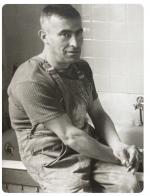 Brief biography:
He was born on November 18, 1916, in Reus, where he lived at number 46 Carrer de Sant Tomàs. He was a cabinetmaker by profession. During the war, he fought in the ranks of the Republican army. In February 1939, he embarked on the path of exile. In France, he was imprisoned in the Sètfontes internment camp – north of Toulouse, Occitanie – where he was forced to enlist in the Foreign Workers' Company no. 101. In May 1940, he was taken prisoner by the German army in Amiens. After passing through several stalags – the prisoner of war camps –, in August 1940 he was deported to the Mauthausen concentration camp, arriving there in the first railway convoy of republican deportees. The carpenter's trade helped him survive. In mid-February 1941, he was transferred to the Gusen satellite camp with registration number 44.199. He was liberated in May 1945 by the allied troops. Isern stayed to live in Paris. In 1962 he participated in the subscription to build the monument dedicated to the memory of the republican deportees who were victims of the Nazi terror in Mauthausen. He returned, after a few years of visiting Catalonia where he had two sisters, Rosita and Mercè. He died in 1983 in France.
Placement date: April 3, 2023
Place: c. Saint Thomas, 46
RAMON GORGA BORRÀS
Brief biography: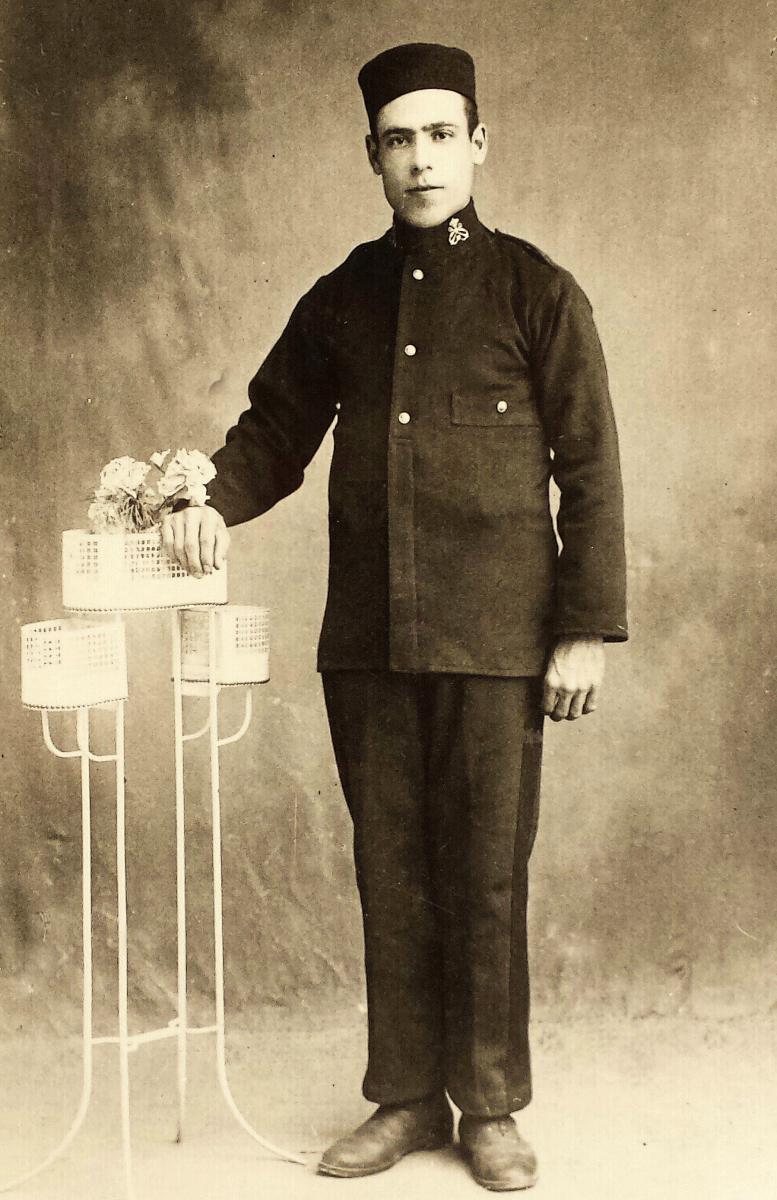
He was born on August 14, 1898 in Poboleda, in the Priorat region. In Reus, he lived at number 60 in the Raval de Santa Anna. He worked in the Abelló carpentry and in the construction of a spa hotel in Salou. In the decade of the 30s, it became part of the Municipal Fire Extinguishing Service of Reus. During the Civil War, as a fireman, he had to deal with the terrible bombings of the fascist aviation - in May 1937 he participated in a course for civil defense instructors in Barcelona. He also worked as a health worker at the Hospital de Sang de Cambrils. In 1939, faced with the fascist advance, Gorga and the Reus fire brigade evacuated the city and went into exile in the French state. In exile, in 1940 he was forced to enlist in the Foreign Workers' Companies and was captured by the Germans. At the end of January 1941, he was deported to the Mauthausen concentration camp with registration number 6.366. A short time later, he was transferred to the Gusen satellite camp with registration number 12.209 where he was killed on October 9, 1941.
Placement date: October 6, 2023
Place: Raval Santa Anna, 60
JOAN ROIG OLIVÉ
Brief biography:
He was born on September 25, 1903 in La Febró. In Reus, he lived at number 5 of Carrer de Sant Francesc. He worked as a farmer and day laborer. 
During the years of the Civil War, Roig - a member of the PSUC and the UGT - was Minister of Supplies and Markets in the Anti-Fascist Committee of Reus and president of the city's Agricultural Union. In exile, after passing through the Argelers camp - in Northern Catalonia - and being forced to enlist in the Foreign Workers' Companies, he was captured by the German army and interrogated in a Gestapo prison in Vienna In April 1941, he was deported to the Mauthausen concentration camp with registration number 4.893. He was liberated in May 1945 by the allied troops. Roig – with serious physical consequences from his time in Mauthausen – stayed to live in the French State. He actively collaborated in the subscription to build the monument dedicated to the memory of the republican deportees who were victims of the Nazi terror in Mauthausen.
Placement date: October 20, 2023
Place: c. of San Francisco, 5
ESTANISLAU PEDROLA ROVIRA
Brief biography: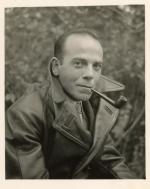
He was born on December 9, 1907 in Montbrió del Camp. In Reus, he lived at no. 10 Carrer de Gaudí. Photographer by profession – he learned the trade in Barcelona – he was one of the pioneers of reportage photography in the countryside and in the country. In this sense, he portrayed some of the main events that the city experienced during the years of the Second Republic. He was known by the pseudonym of "Sandàlio". He was an active member of the Foment Nacionalista República, a nationalist and left-wing organization from Reus affiliated to the ERC. And later, from the Catalan independence party. When the Civil War broke out, he joined the Republican army as a volunteer. He was appointed commissioner of the Catalan State and was a member of the alpine militias of this party destined for Tírvia, in the region of Pallars Sobirà. In exile, he was imprisoned in the concentration camps of Barcarès - in Northern Catalonia - and Agde - in Occitania - from which he fled. After a while he joined the ranks of the anti-fascist resistance to fight the German occupation - it seems that he collaborated in a clandestine network that facilitated the escape of Allied airmen shot down in France.
In January 1944, he was arrested by the Gestapo and imprisoned in Compiègne prison. He was deported to the Buchenwald concentration camp - near the German city of Weimar - with the registration number 40.400 and shortly after, to the Flossenbürg camp - in Bavaria - with the registration number 6.506 where he was killed on December 7 1944
Placement date: October 23, 2023
Place: c. Gaudí, 10
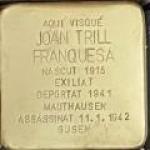
JOAN TRIL FRANQUESA
Brief biography: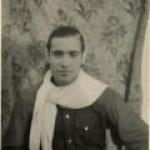
He was born on September 21, 1915 in Reus where he resided at number 29 of Carrer de Misericordia. He worked as a farmer and a sawyer. After the war, he had to go into exile in France. He was part of the Foreign Workers' Companies and in July 1940, he was taken prisoner by the German army. After passing through several stalags – the prisoner of war camps – in January 1941 he was deported to the Mauthausen concentration camp with registration number 3.487. After some time, Trill was transferred to the Gusen satellite camp with registration number 13.635 where he was killed on January 11, 1942.
Placement date: October 25, 2023
Place: c. Mercy, 29
JOSEP CASALS ARTIGATE
Brief biography: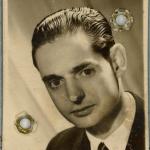
He was born on April 12, 1921 in Reus where he lived at number 4 on Santa Clara Street. He worked as a locksmith. After fighting as a member of the "bottle lift" in the ranks of the Republican army - he participated in the Battle of the Ebro -, he was exiled and imprisoned in the Argelès concentration camp - in Northern Catalonia. He was forced to enlist in the Foreign Workers' Companies, sent to reinforce the Maginot Line and captured by the German army in June 1940. At the end of 1940, he was deported at the age of just 19, to the Mauthausen concentration camp with registration number 4.678. His skill with mechanics - he was a handyman - helped him survive the hell of Mauthausen. Casals - close to the PSUC - was part of the network of solidarity and mutual support of the Republican deportees. He was released in May 1945. He actively participated in meetings of former deportees and in 1990, he visited Mauthausen accompanied by his wife Enriqueta Folqué. Every year, he spent the summer in Reus. He died in France in March 2004.
Placement date: October 26, 2023
place: Bages Street, 13 (Pallol)
JOSEP MARIA MONNÉS SENTÍS
Brief biography:
He was born on September 8, 1916 in Reus where he lived at number 21 Carrer de Pi i Margall - it corresponds to the current Carrer del Roser. He worked as a saddler and locksmith. In exile, he was forced to enlist in the Company of Foreign Workers no. 140 and in June 1940, captured by the German army. At the end of January 1941, he was deported to the Mauthausen concentration camp with registration number 6.750. A few weeks later, he was transferred to the Gusen satellite camp with registration number 9.959.
On August 15, 1941, Monné – sick or unable to work – was sent and killed in the gas chambers of Hartheim Castle, an extermination center located about thirty-five kilometers from the Mauthausen-Gusen complex.
Placement date: October 27, 2023
Place: c. del Roser, 21
ALFONS TALARN REÑÉ
Brief biography:
He was born on December 30, 1899 in Blancafort, in the region of Conca de Barberà. From the twenties, he came to live in Reus where he resided at number 37 in Carrer d'en Sardà. All his life he worked as a barber. He was one of the most prominent founders and militants of the communist movement – political, trade union and cultural – in Reus and the southern regions of the Principality. As an example, he was the president of the Marxist Center. And in the elections to the Parliament of Catalonia in 1932, he was part of the electoral list of the Communist Party of Catalonia in the demarcation. In the years of the war, he was one of the most active and relevant communist activists in the city and the region. Likewise, he was one of the promoters of the Cooperative of Barbers and Hairdressers UGT-CNT of Reus. In exile, he was imprisoned in the Sant Cebrià concentration camp - in Northern Catalonia. He was forced to enlist in the Foreign Workers' Companies and in June 1940, taken prisoner by the German army near the city of Dunkirk. In mid-December 1941, he was deported to the Mauthausen concentration camp with registration number 4.767. He was released in May 1945. Like hundreds of ex-deportees, Talarn suffered physical consequences from his time in Mauthausen. At first, he stayed to live in France where he maintained his political and trade union militancy in the communist ranks. In 1950, he returned to Reus where he opened a barbershop in the Miró creek - underground, he collaborated with the anti-Franco opposition. He died in 1974.
Placement date: October 30, 2023
Place: c. Sardà, 37
ANTON BOFARULL FERRER
Brief biography: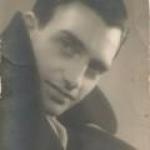
He was born on November 21, 1911 in La Riba, in the Alt Camp region. In Reus, he lived at number 18, Carrer de l'Alcalde Manuel Sardà -corresponds to the current Carrer de Sant Jaume. Commercial agent by profession, he was a member and active member of the Foment Nacionalista Republicanà, a nationalist and left-wing organization from Reus affiliated to the ERC. During the war, he was not mobilized but participated in the war effort of the Republic. In exile, after being imprisoned in the concentration camp in Alger in Northern Catalonia , he went to live in Nice where he worked in a perfumery wholesale business. After a while, he joined the ranks of the anti-fascist resistance to fight the German occupation of France – it seems that he became part of an evasion network of allied airmen. In March 1944, he was arrested by the Gestapo in Perpignan and sent to Compiègne prison. From there, he was deported to the concentration camp in Neuengamme – near Hamburg – with registration number 31.236 to be exploited as slave labour. At the end of the war, he was transferred to the Ravensbrück concentration camp - north of Berlin - from where he was liberated in April 1945 by the Red Army. That same year, he decided to return to Catalonia to rebuild his life. He died in 1991.
Placement date: November 3, 2023
Place: c. Sant Jaume, 18
MIQUEL FORT SEGUÉ
Brief biography: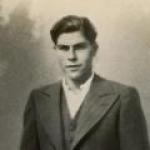
He was born on March 15, 1920 in Reus where he lived at number 11 of Carrer de la Barceloneta. He worked as a farmer. During the Civil War, he fought in the ranks of the CNT-FAI. In exile, he was forced to join a Foreign Workers' Company and was captured by the German army in June 1940. After passing through several stalags - the prisoner-of-war camps - in April 1941 he was deported to the Mauthausen concentration camp with registration number 3.981. After a few months, he was transferred to the Gusen satellite camp with registration number 14.305 where he was killed on December 4, 1941.
Placement date: November 16, 2023
Place: c. de la Barceloneta, 11
BROTHERS PERE AND JOAN VERGÉS ALEU
Brief biography:
Joan was born on 13 March 1886 and Pere – the little one – on 18 October 1896 in Reus. Both lived together with their mother, at number 29 of the old Carrer de l'Alcalde Manuel Sardà - it corresponds to the current Carrer de Sant Jaume. From humble and popular origins, Joan worked as a bleacher and Pere as a laborer. In the 1920s and 1930s, they served in the ranks of the Casa del Poble, one of the historical entities of republicanism in the city. In exile, they were forced to enlist in the Companies of Foreign Workers and in June 1940, captured by the German army. After passing through different stalags – the prisoner of war camps – at the end of January 1941, they were deported to the Mauthausen concentration camp in the same railway convoy. In Mauthausen, John received registration number 6.592 and Peter number 6.593 – significantly, the numbers are correlative. As you can see, despite the adversities, the Vergés brothers did their best not to separate at any time. Finally, their paths tragically parted: in March 1941, both brothers were transferred to the Gusen satellite camp. Peter - the younger brother - was killed on August 14 and John - the elder - on November 12 of that year.
Placement date: November 17, 2023
Place: c. de Sant Jaume, 29
ENRIC CALABUIG BUIGUES
Brief biography:
He was born in September 1918 in Gandia, in the Valencian Country. During the years of the Second Republic and the war, he was a union member in the Reus Sawmills and Packing Box Builders Society. –so, he worked in the woodworking industryIn exile, he was forced to enlist in the Foreign Workers' Companies. –specifically, in no. 140– and captured by the German army. In April 1941 he was deported to the Mauthausen camp. And a few months later, he was transferred to the satellite camp of Gusen where he was murdered on December 9, 1941.
Placement date: March 6/14, 2025
Location: Batan Street, 28
JOSEP JUNCOSA ESCODA
Brief biography:
He was born in January 1914 in Tivissa, in the Ribera d'Ebre. Soon, the Juncosa family went to live in Gratallops and, later, in Reus to earn a decent living. In Reus, he worked as a cabinetmaker. During the war years, he joined the Unified Socialist Party of Catalonia and apparently was a commissar of the Popular Army. In exile, he was imprisoned in the French concentration camp of Sètfonts. He was forced to enlist in the Companies of Foreign Workers, sent to work in the fortifications of the Maginot Line and finally, captured by the German army. In August 1940 he was deported to Mauthausen where he was held captive with other deportees from Reus. After a while, he was transferred to the subcamps of Schwechat and Floridsdorf – one of the districts of Vienna.
Everything indicates that he became part of a working group that collaborated with the fire department to deal with the bombings of the Allied aviation. On November 17, 1944, Juncosa, together with Josep Miret Musté, who was Minister of Supplies of the Republican Generalitat, were wounded in one of these bombings in Floridsdorf and executed by a shot by an SS officer.
Placement date: April 2/April 14, 2025
Location: 40 Camí de Riudoms Street
JOSÉ MORENO ALCANTARA
Brief biography:
He was born in June 1886 in the municipality of Canjáyar, in Almería. By the XNUMXs, he was already living and working in Reus, where he raised a family. Everything suggests that he served in the ranks of the National Confederation of Labor. In exile, he was imprisoned in Angoulême prison. –in the Charente region– and in August 1940 he was deported to the Mauthausen concentration camp in the infamous Angoulême Convoy or Convoy of 927. At the end of January 1941, Moreno –sick and therefore unable to work– was sent to the infirmary of the Gusen subcamp where he was murdered in October of that year.
Placement date: May 12, 2025
Location: Santa Helena Street, 32
EUDALD MERCADÉ MARTÍ
Brief biography:
He was born in January 1917 in Reus. During the Civil War, after training as a French soldier and receiving the title of military pilot, he became a pilot in the Air Forces of the Republic. Specifically, he joined the 3rd Squadron of the 26th Group of Polikarpov I-15, the fighter known as Xatos. In October 1937, this unit was assigned to the Reus air base where Mercadé suffered a serious accident with his aircraft. In fact, in October 1938, he was removed from active service due to the injuries received in the accident. In exile, he was part of the Foreign Workers' Companies and was taken prisoner by the Germans in June 1940. He was deported to the Mauthausen concentration camp in mid-December 1940 and shortly thereafter, transferred to the satellite camp of Gusen where he was murdered in October 1941.
Placement date: May 22, 2025
Location: c. Raval de Jesús, 4
JOAQUIN SANTIAGO CALAHORRA
Brief biography:
He was born in August 1912 in Reus. Of humble origins, in 1936 he worked as a stonemason on the Vilaverd road – the one that connects the city with Montblanc. In exile, after being imprisoned in a French concentration camp, he was part of the 140th Foreign Workers Company. In June 1940, he was captured by the German army and on January 27, 1941, he was deported to the Mauthausen concentration camp. Shortly after, he was transferred to the satellite camp of Gusen and, in the summer of 1943, to the Wiener Neudorf camp. Without a doubt, his experience and skill as a stonemason made him a very useful worker for the Nazi machinery, a fact that helped him survive. He was liberated in May 1945.
Placement date: June 4, 2025
Location: c. Sant Sebastià, 9
RAMON RECASENS MARSAL
Brief biography:
He was born in July 1903 in Tarragona. By the 30s, he was already living in the city of Reus where He worked as a foreman in one of the city's main textile factories. With an anarcho-syndicalist ideology, he was actively involved in the National Confederation of Labor -CNT. During the war, he fought in the ranks of the Durruti Column on the Madrid and Aragon fronts. In exile, he joined the French anti-fascist resistance. In February 1943, he was captured by the German occupation forces and in January 1944, deported to the Buchenwald concentration camp – other sources indicate that before that, he was sent to the Mauthausen-Gusen complex. In May 1945, he was released from captivity. He lived in Andorra where he collaborated with the underground CNT. He was a member of the Spanish Federation of Political Deportees and Internees (FEDIP). He spent his summers in Andorra, but lived in Bordeaux, where he died in 1974.
Placement date: June 9, 2025
Location: c. Sant Esteve, 10
JOSEP FREIXES FRANCH
Brief biography:
He was born in January 1918 in Reus into a farming family originally from Ulldemolins. In exile, he joined a Foreign Workers Company and was captured by the German army in June 1940. In December 1940, he was deported to the Mauthausen concentration camp. A few months later, he was sent to the satellite camp of Gusen where he was murdered in October 1941.
Placement date: June 13, 2025
Location: c. Eugeni Mata, 7
RAMON SANS GATELL
Brief biography:
He was born in November 1903 in Reus. A writer by trade, he worked in banking, specifically at the branch of the Banco Hispano Colonial in the city. During the Civil War, he was active in the Association of Banking, Stock Exchange and Savings Employees of the UGT of Reus – and was a delegate to the local UGT Committee. In exile, he was part of the Foreign Workers' Companies and in June 1940, he was captured by the Germans. After passing through several prison camps, on March 3, 1941, he was deported to the Mauthausen concentration camp. A few days later, he was transferred to the satellite camp of Gusen where he was murdered on May 21, 1941.
Placement date: June 13, 2025
Location: c. Galanes, 10
SALVADOR BESORA GARCIA
Brief biography:
He was born in May 1901 in Reus. A waiter by trade, everything seems to indicate that he served as a man of action, in the ranks of the libertarian movement in Reus. –we have evidence that he was arrested in 1924 and 1935. During the war, he joined the Libertarian Youth and fought in the Jubert Division on the Aragon front. In French exile, he joined the anti-fascist resistance to fight the German occupation. In the summer of 1944, he was arrested and deported to the Dachau concentration camp. Later, he was transferred to the Mauthausen complex from where he was liberated in May 1945. He died in the Occitan municipality of Salanhac in 1957.
Placement date: June 13, 2025
Location: c. del Vent, 44
LLOP MASSAGUÉ LLUCH
Brief biography:
He was born in March 1913 in Reus, although he moved to Barcelona as a child. A bricklayer by trade and anarchist by ideology, he was a member of the National Confederation of Labor – he became a man of action for the union. In French exile, he was interned in the concentration camps of Argelès, Barcarès and Sant Cebrià. He was part of the 118th Company of Foreign Workers. He was captured by the German army in the Dunkirk bag in June 1940. In mid-August 1940 he was deported to the Mauthausen camp where he worked in the quarry. Later, he was transferred to the satellite camps of Schwechat and Ebensee from where he was liberated in May 1945. Under the title Mauthausen, end of journey. An anarchist in the fields of death, wrote a memoir about his captivity in the Mauthausen complex (published in 1997). He died in French territory in 1996.
Placement date: June 13, 2025
Location: Victoria Street, 9




 977 010 010